Women's sexual and reproductive health : inequality of opportunity in Asia and the Pacific

The sixth in the series of policy papers on Inequality of Opportunity in Asia and the Pacific (following Education, Decent Work, Clean Energy, Child Nutrition, and Water and Sanitation), this paper uses innovative methods to identify the “furthest behind” in women’s and girls’ access to sexual and reproductive health services. It specifically explores gaps in access to skilled birth attendance and in the use of modern contraceptive methods, highlighting the importance of leaving no one behind, as pledged in the 2030 Agenda.
Financial inclusion : inequality of opportunity in Asia and the Pacific

The seventh in the series of Inequality of Opportunity in Asia and the Pacific policy papers (following Education, Decent Work, Clean Energy, Child Nutrition, Water and Sanitation, and Women’s Sexual Reproductive Health), explores gaps between group in access to financial services as measured by ownership of a bank account. It sheds light on the layers of circumstances shared by the “furthest behind” groups and highlights the importance of reaching them as pledged in the 2030 Agenda for Sustainable Development.
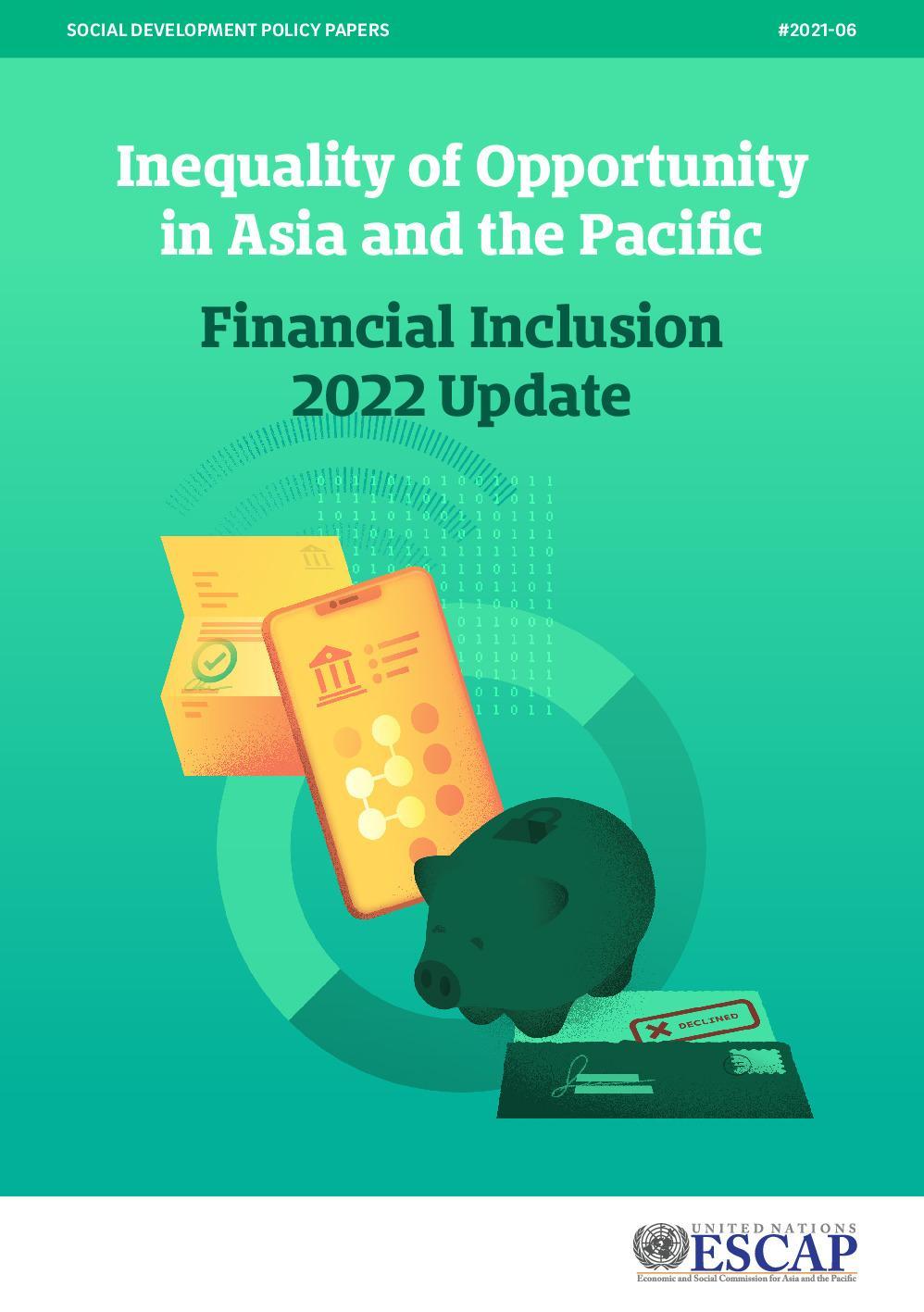
Inequality of opportunity on Asia and the Pacific : financial inclusion 2022 update

The ESCAP nequality of Opportunity papers place men and women at the heart of sustainable and inclusive development. They do so by identifying areas where inequality jeopardizes a person’s prospects, namely: education; women’s access to sexual and reproductive health care; children’s nutrition; decent work; basic water and sanitation; access to clean energy; and financial inclusion. Each of these opportunities is covered by specific commitments outlined in the 2030 Agenda for Sustainable Development and addressed in separate thematic reports covering 27 countries throughout Asia and the Pacific. ESCAP first discussed inequality of opportunity in its 2015 report Time for Equality, establishing the distinction between inequality of outcome and inequality of opportunity. While the former depicts the consequences of unequally distributed income and wealth, the latter is concerned with access to key services necessary to fulfil one’s basic rights.The Inequality of Opportunity papers apply a novel approach to analysing household surveys with the aim of identifying the groups of individuals with the lowest access to the above-referenced opportunities. These groups are defined by common circumstances over which the individual has no direct control, such as their wealth, place of residence and education level, amongst others. In addition to identifying the furthest behind, the Inequality of Opportunity papers also explore the gaps between groups in accessing these key opportunities, as well as the extent to which these have narrowed or widened over time. They also review overall inequality trends in these opportunities. Ultimately, these findings are of direct use for generating discussion on transformations needed to reach the “furthest behind first” as pledged in the 2030 Agenda for Sustainable Development.
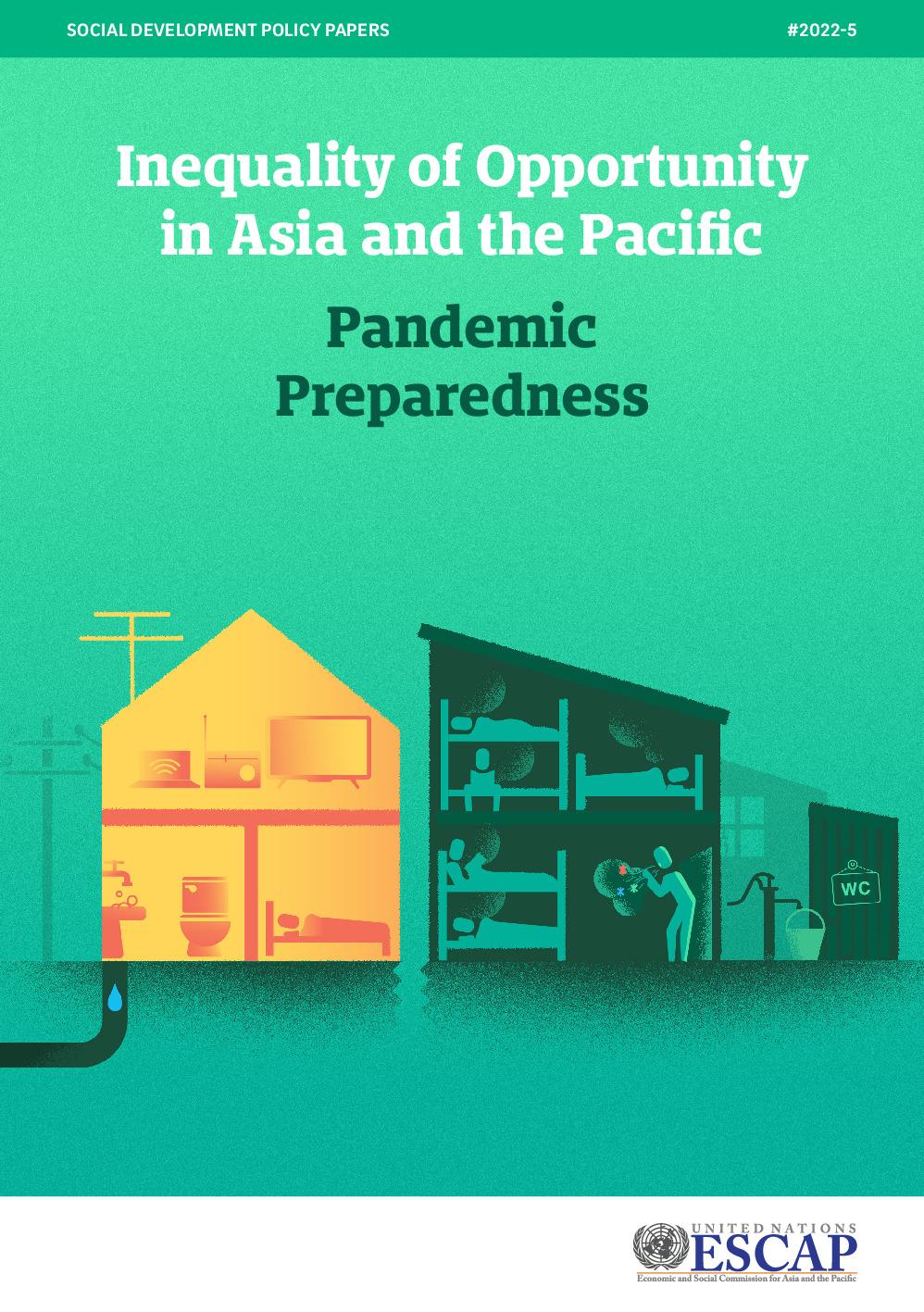
Inequality of opportunity in Asia and the Pacific : pandemic preparedness

Pandemics have constituted challenging and recurrent episodes of humankind history. Major pandemics such as plagues, cholera, smallpox, tuberculosis and influenza have afflicted the health and well-being of millions, bringing societies and economies to their knees. The world is still grappling with the COVID-19 pandemic caused by the SARS-CoV-2 virus. As of April 25, 2022, the World Health Organization (WHO) had confirmed over 500 million positive cases and over 6 million deaths worldwide. While most infected by COVID-19 do recover, many will suffer long-term consequences, such as fatigue, fever, tiredness and depression. The COVID-19 pandemic has been a major shock to economic and social progress in Asia and the Pacific. By exacerbating existing inequalities of income and access to basic services and opportunities, the pandemic could reverse decades of hard-won gains by pushing millions back into poverty. Its far-reaching health and economic consequences are still unfolding. Poorer individuals, migrants, informal workers, less educated groups, women, children and the youth, are more likely to contract the virus because of living and working conditions that limit their ability to protect themselves from the disease. At the same time, the health consequences of the disease are felt by all, particularly older persons and those suffering from chronic or long-term health conditions. The economic costs of the COVID-19 pandemic have been high. During 2020, the Asia-Pacific region experienced a GDP contraction of 1.1 per cent. Disruptions in economic activity are estimated to have pushed 75-80 million people back into extreme poverty. The years 2021–2022, however, proved to be even more challenging as the highly contagious Delta and Omicron variants resulted in further lockdowns and continued travel bans. The situation was aggravated by the slow progress of vaccination rollouts. As COVID-19 is turning endemic, it is time to reflect on how to better prepare for future similar threats. In addition to national public health responses and global detection and coordination efforts, much of the preparation can be done at the household level. Understanding and addressing inequalities in access to basic services.
Active labour market policies in Asia and the Pacific : a review of the literature

This paper reviews the evidence on the effectiveness of active labour market programmes in low- and middle-income countries with high informality, highlighting examples of interventions that have been implemented in combination with other policies including social protection measures. In reviewing the literature, we adopt a scoping review methodology to identify studies that look at a range of programme outcomes including earnings, employment, formality and productivity. We include studies from 2000 onwards, and after a thorough selection and screening process we end up with 106 papers for the review. Most of these studies find some positive aspect associated with the programme under study, although significant positive aspects are in many cases contingent on a specific target population, or time frame of programme and evaluation. We employ a theory of change conceptual framework to further discuss the channels, mechanisms and assumptions that are seen to underpin programme effectiveness (or the lack of). Success often depends on specific contextual factors and/or the joint implementation of different types of active and/or passive labour market policies, including specific social protection measures or other public policies.

How to Design Inclusive Old Age Pension Systems in Asia and the Pacific

Pension schemes protect older persons and their families facing barriers to earning an income in old age, as well as potential increases in health and other expenditures. While many people in the Asian and Pacific region continue to work into old age, labour force participation and earnings decrease at older ages. This is strongly linked to higher levels of disability and decreasing health in old age. It is related to factors such as age and gender discrimination in the workplace, legal restrictions, mandatory retirement age and cultural norms. Women are also more likely than men to be without income in old age. Disability and ill health not only create challenges for accessing paid work, but contribute to higher costs for older persons, including costs of accessing health care and personal assistance. While cultural traditions of family support to older persons have been historically strong in the region, the support provided is often insufficient, and providing this support puts pressure on household finances and employment prospects, particularly for women.

Action plan to strengthen regional cooperation on social protection in Asia and the Pacific (Background Document)

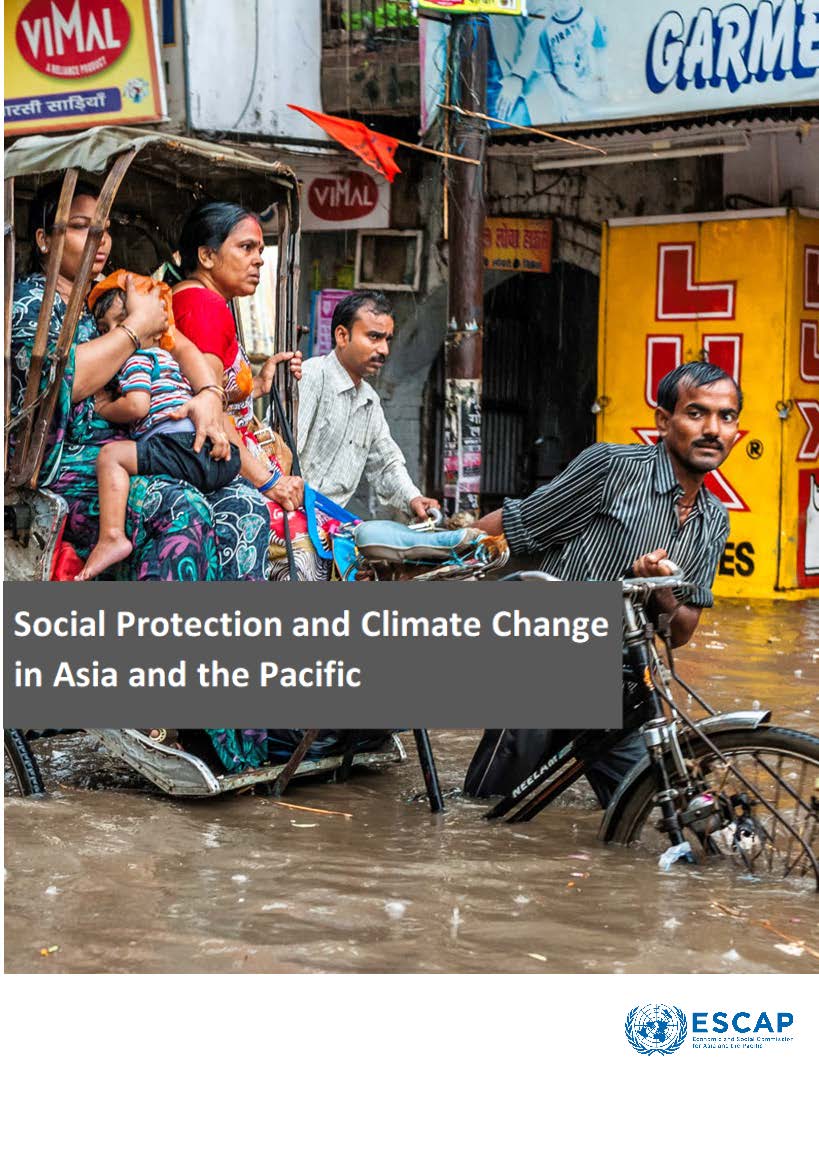
Never before has the need for social protection been greater. The coronavirus disease (COVID-19) pandemic has accentuated the central role that social protection plays in building resilience and mitigating risks for individuals, households and society at large. The crisis has also highlighted the importance of social protection schemes that cover everyone throughout their lives. Social protection is one of the core national strategies for preventing poverty and vulnerability and also serves as an enabler for implementing the 2030 Agenda for Sustainable Development and achieving target 1.3 of the Sustainable Development Goals.Recognizing its importance as both a fundamental right and an effective mechanism for promoting sustainable development, many countries in Asia and the Pacific are increasing their efforts to broaden social protection coverage. Nevertheless, the region’s investment in social protection is lower than the global average, resulting in 60 per cent of the population remaining vulnerable to ordinary contingencies throughout their lives, such as sickness, unemployment, disability, pregnancy and old age. The Committee on Social Development, at its fifth session, convened from 28 to 30 November 2018, recommended strengthening regional cooperation on social protection through the establishment of a regional modality. In response, the secretariat has worked with experts nominated by member States to develop an action plan to strengthen regional cooperation on social protection in Asia and the Pacific, contained in the present document. The draft action plan was submitted to the Economic and Social Commission for Asia and the Pacific for endorsement at its seventy-sixth session, but the Commission requested the Committee at its sixth session to review the action plan with a view to providing advice on the follow-up, as appropriate. In this regard, the Committee may wish to review the action plan with a view to endorsing it.

Action plan to strengthen regional cooperation on social protection in Asia and the Pacific

In October 2020, ESCAP member States acknowledged the centrality of social protection to achieving inclusive and sustainable development and endorsed the Action Plan to Strengthen Regional Cooperation on Social Protection in Asia and the Pacific. The action plan serves as guiding document for ESCAP member States to agree on a regional shared vision, strategy and platform on social protection. Universal social protection and the Social Protection Floor (SPF) Initiative provide the guiding frameworks for ESCAP’s work in the area of social protection. Through the Regional Action Plan, ESCAP aims to support national and regional efforts by enhancing the capacity of member States to build and strengthen inclusive social protection systems.

The promise of protection : social protection and development in Asia and the Pacific

Over the past two decades, the Asia-Pacific region has witnessed a number of economic crises that have threatened progress towards reducing poverty and achieving the Millennium Development Goals. These crises reflect the increased risks associated with globalization, especially for the poor and those without voice. In addition, several countries in Asia and the Pacific have been profoundly affected by high-impact natural disasters which have exposed vulnerabilities and amplified the insecurities of many people’s livelihoods. This has especially been the case for poor households located in rural areas. Such crises and development challenges have generated renewed interest in social protection as a tool to mitigate not only the impacts of shocks but also to help accelerate the recovery of people most affected by such events. Much of this interest has focused on the risks and vulnerabilities that have emerged as a result of specific events and, consequently, social protection initiatives have tended to be reactive rather than proactive. Yet, it is also known that poverty and exclusion magnify the effects of crises, and so to be truly effective and transformative social protection must be linked to efforts to reduce poverty and exclusion and in so doing eliminate the structures that place people in situations of vulnerability in the first place. This report provides a compelling argument for advancing the social protection agenda in Asia and the Pacific along this direction.

Closing the gap : empowerment and inclusion in Asia and the Pacific

Equality lies at the heart of the 2030 Agenda for Sustainable Development and its ambition to leave no one behind. This report, prepared as the theme study for the 75th Commission Session, gages recent progress towards equality in three key outcomes: education, full-time employment and income. Covering the past ten years, the report assesses whether women, rural populations, persons with disabilities and other disadvantaged groups have fallen further behind, been included in overall national development gains, or empowered to catch up with outcome levels of more privileged groups. The report builds its narrative on quantifying progress in inclusion and empowerment by measuring how gaps between disadvantaged and advantaged groups have changed over time. It finds encouraging signs of empowerment in education, but such developments are often eclipsed by less widespread improvements in full-time employment. The picture that transpires is one where disadvantaged groups, in several countries, have benefited from broader economic growth and societal progress, while advantaged groups have been in the driver’s seat. With slow progress towards equality, the story of a dual speed region is more than anecdotal.