How to implement inclusive social protection schemes

This is the third in a series of policy guides developed to support policymakers and practitioners in Asia and the Pacific in their efforts to strengthen social protection. This policy guide explains the administrative processes, organizational policies and systems required to implement tax-financed social protection, focusing on schemes providing income support. For social protection schemes to be effective, inclusive and sustainable, the right amount of money needs to be paid to the right person at the right time. This requires institutions and administrative systems that are efficient, account for public resources transparently and ensure good quality service delivery

Why we need social protection

This policy guide, developed by ESCAP together with Development Pathways, explains the basic principles of social protection and the impact it can have on poverty reduction, social cohesion, economic growth and the environment. It shows how investing in inclusive social protection can accelerate progress toward achieving the Sustainable Development Goals and the 2030 Agenda. The guide is the first in a series of four policy guides developed to support policymakers and practitioners in Asia and the Pacific in their efforts to strengthen social protection. The second guide explains how to design inclusive and robust social protection systems and focuses on tax-financed income security; the third will focus on the effective implementation of inclusive social protection schemes and the fourth will discuss options for financing.

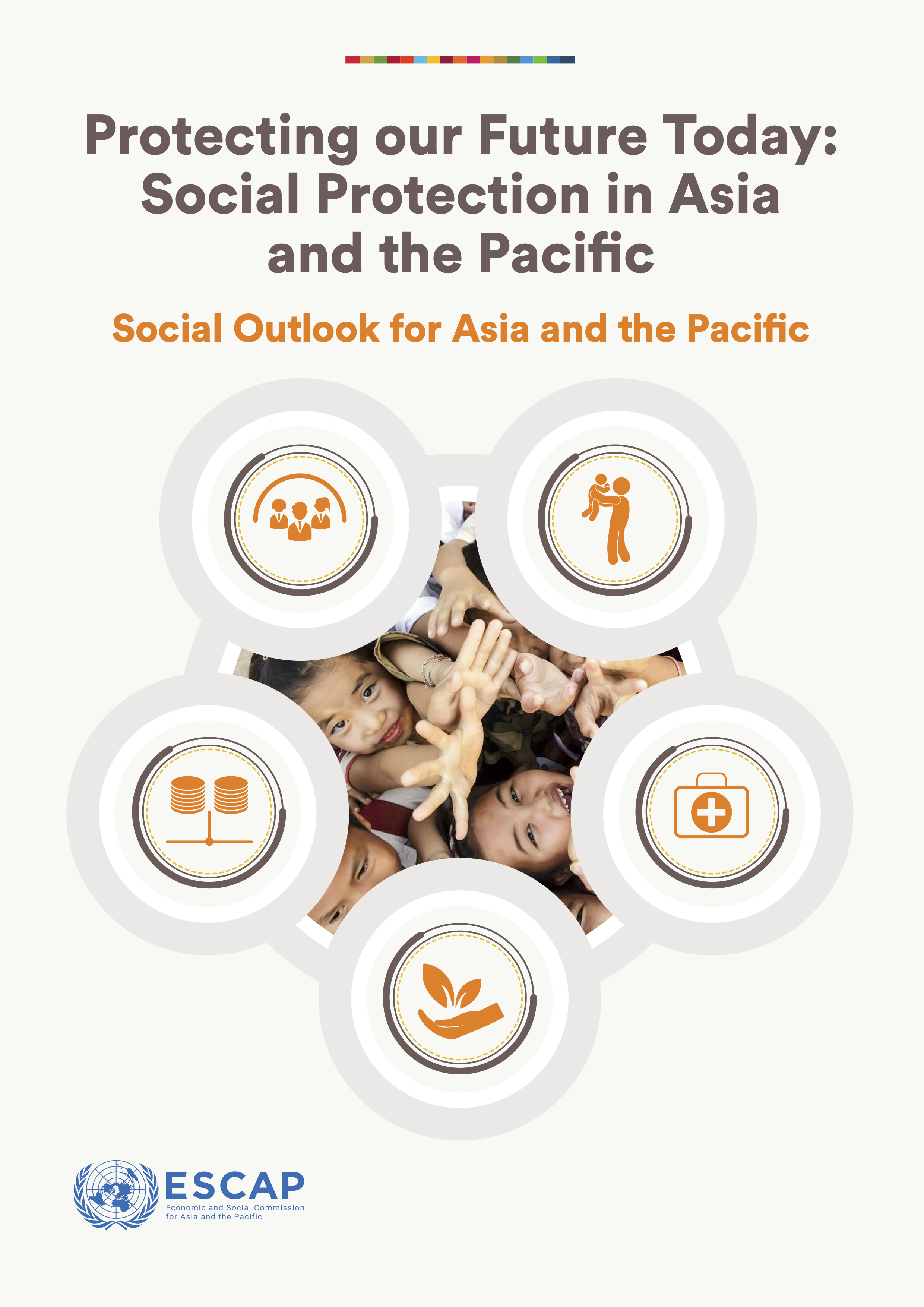
Social outlook for Asia and the Pacific : poorly protected

The Social Outlook for Asia and the Pacific lays out new arguments and evidence for the critical and urgent need to increase investment in people, particularly in social protection. Developing countries in Asia and the Pacific only spend about 3.7 per cent of GDP on social protection, compared to the world average of 11.2 per cent. This under investment is the reason why 60 per cent of the population in the Asia-Pacific region has no protection if they fall ill, have a disability, become unemployed, pregnant or old. With 1.2 billion people living on than less $3.20 per day, of which 400 million live on less than $1.9 per day, social protection is an essential strategy to tackle poverty and deprivation. The evidence for increasing the level of investment in people in Asia and the Pacific is overwhelming: around 328 million people would be lifted out of moderate poverty and 52 million would move out of extreme poverty, if countries in the region matched the global averages of spending on education, health and social protection. Countries in the region do not have to wait to become rich to start investing in people. Even low income and lower-middle income countries can boost social spending, as evidenced by some first movers across the region.